
equineeyes

curved design shape

Our Mission

At Equine Eyes, we empower individuals with visual disabilities by providing trained miniature horses as service animals. Our mission enhances independence, increases mobility, and improves quality of life through innovative service horse training. Each trained horse is provided to each individual free of charge. By fostering the unique bond between humans and horses, we aim to create a world where every person with visual disabilities can lead a more fulfilling and self-sufficient life, and to enhance the effectiveness of the Americans with Disabilities Act of 1990.

babyhorse-image
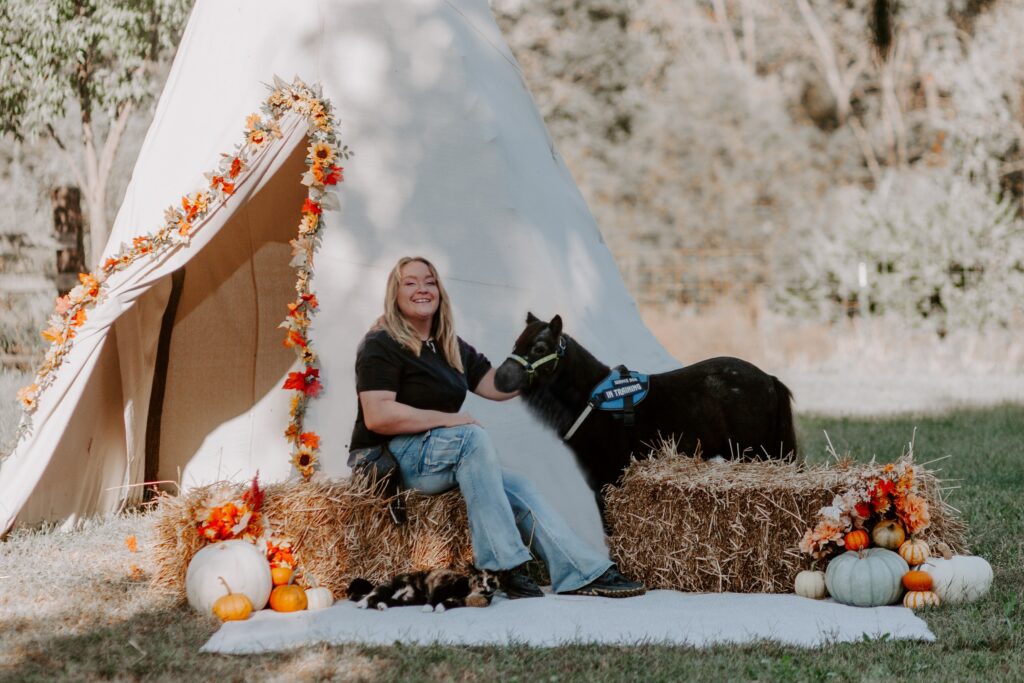
horse with trainer image

What Is a Miniature Guide Horse?

A miniature guide horse is a tiny horse that has been specially trained as a service animal to guide an individual who is visually impaired, offering an alternative to a guide dog.
Miniature horses used for guide work are chosen for their calm temperament, intelligence, small stature and physical soundness. Through extensive training, they learn to:
  • Stop at curbs & stairs to signal a change in elevation
  • Navigate around overhead & ground level obstacles
  • Adjust walking speed based on commands, similar to shifting gears.
  • Respond consistently to handler cues
  • Remain calm in crowded or noisy environments
  • Potty on cue at a desired location
Miniature guide horses are not pets. They are working service animals trained to perform specific mobility-related tasks. They are the only animal included with service dogs that are recognized under the Americans with Disabilities Act (ADA),

We are a nonprofit organization dedicated to training and placing miniature guide horses—at no cost—to qualified individuals who are blind or have low vision. These remarkable service animals provide safe and reliable mobility assistance, helping their handlers navigate the world.

Our mission is rooted in compassion, innovation, and inclusion. Through our unique approach to service animal training, we aim to expand the possibilities for those living with visual disabilities and uphold the spirit of the Americans with Disabilities Act of 1990 by offering a powerful new option in mobility support.

2horses
logo-icon

Join us on this journey as we

“Guide In Stride — Where Purpose And Passion Coincide.”

support our GoFundMe campaign -

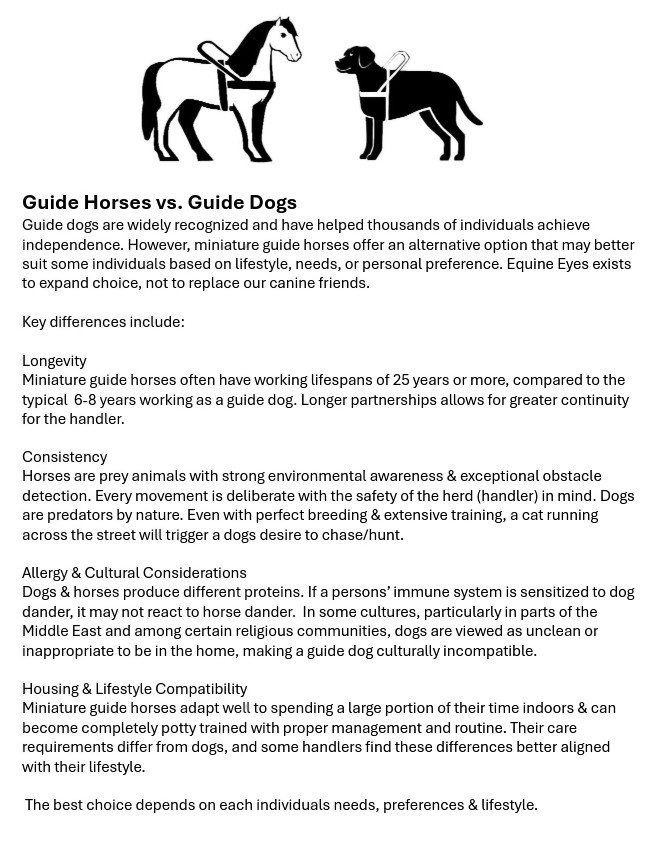
Guide Horses vs Guide dogs

At Equine Eyes, our training program is the cornerstone of our mission. Training a miniature guide horse is a long-term commitment that requires 12 to 24 months, depending on the horse’s age, maturity, and learning style. Each horse progresses at its own pace, and under no circumstances is a horse rushed or forced. Each miniature horse accepted into our program undergoes a comprehensive, compassionate, and highly specialized training process.

About Equine Eyes

Founded in 2024, we provide a unique alternative to traditional guide animals-offering highly intelligent, calm, and reliable guide horses that help individuals navigate the world with greater independence and confidence.

Each horse is carefully selected and trained for real-world environments to ensure safety and consistency. Our guide horses are provided at no cost to qualified recipients, made possible through the support of donors, sponsors, and volunteers who believe in expanding accessibility and opportunity

Founder image

A Horse of Course

- Josh Kennedy

Equine Eyes

“My name is Josh Kennedy, and I have been blind from birth due to retinopathy of prematurity.”

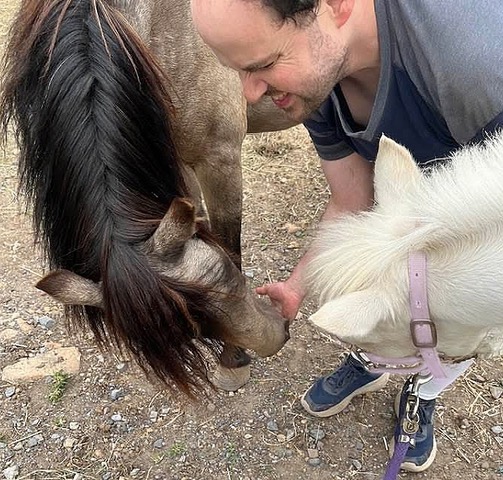
Horses have been a part of my life since childhood, when I started riding in therapeutic programs at eight years old. Two years ago, when my son began taking lessons at a local farm, I went with him. There, I spent a lot of time with a miniature horse, learning about it and even getting to walk on its right side as if it were a guide horse. Compared to a guide dog I encountered on a field trip several years ago, I immediately trusted the mini much more as a guide—even though it was being led.
I’ve since spent countless hours working with horses and ponies, learning to communicate with them through my sense of touch, my voice, and even through breath contact. When I walked horses back to the pasture after lessons, I noticed them instinctively guiding me in the direction of the pasture without any explicit training to guide a blind person. For me, building trust and a deep bond with horses isn’t just rewarding; it’s essential. Horses are calm, gentle, and seem to instinctively adjust to my blindness in ways that other animals, like dogs or cats, simply don’t. I’ve tried to connect with dogs, but their energy, unpredictable movements, and shorter lifespans just aren’t a good fit for me.

What draws me to the idea of having a guide horse is much more than just practical mobility. Not only will I have more precise navigation than what I would get with a dog, but with a horse, I can build a relationship grounded in mutual trust and understanding, using the sensory ways I interact with the world. Guide horses are steady, live much longer than dogs, and—most importantly—they offer the kind of emotional support and companionship I truly need as a blind person.

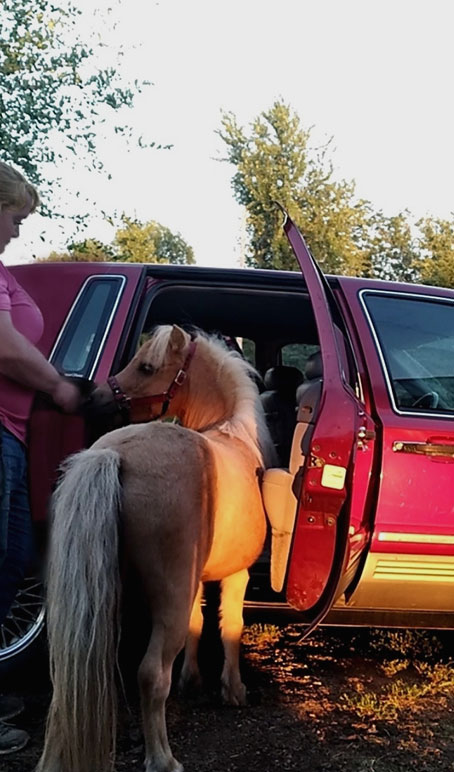
horse in the car

- Cali

Equine Eyes

“Excepteur sint occaecat  cupidatat non proident”

Lorem ipsum dolor sit amet, consectetur adipiscing elit, sed do eiusmod tempor incididunt ut labore et dolore magna aliqua. Ut enim ad minim veniam, quis nostrud exercitation ullamco laboris nisi ut aliquip ex ea commodo consequat. Duis aute irure dolor in reprehenderit in voluptate velit esse cillum dolore eu fugiat nulla pariatur. 
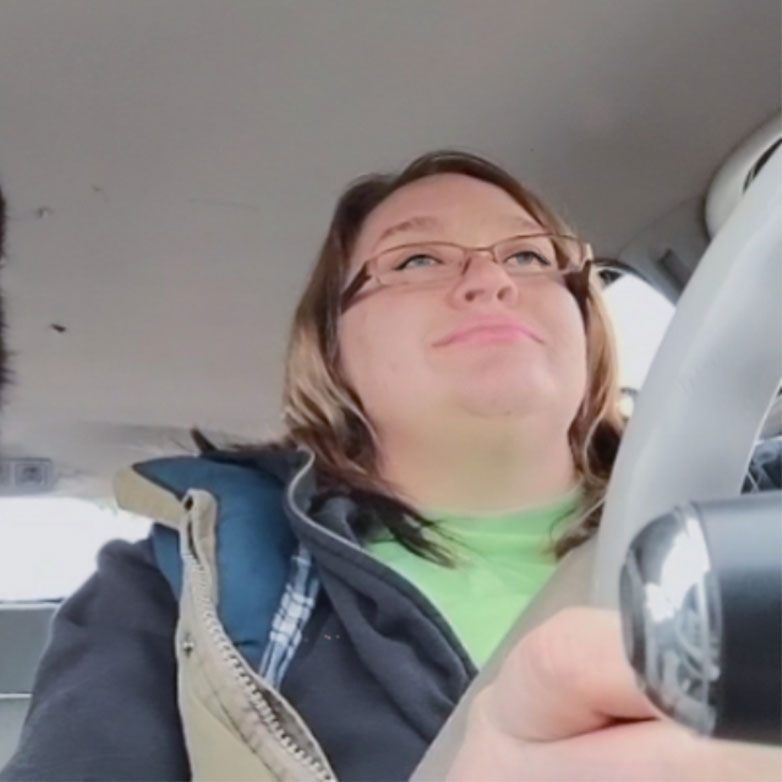
horse in the car

- Mona

Equine Eyes

“Excepteur sint occaecat  cupidatat non proident”

Lorem ipsum dolor sit amet, consectetur adipiscing elit, sed do eiusmod tempor incididunt ut labore et dolore magna aliqua. Ut enim ad minim veniam, quis nostrud exercitation ullamco laboris nisi ut aliquip ex ea commodo consequat. Duis aute irure dolor in reprehenderit in voluptate velit esse cillum dolore eu fugiat nulla pariatur. 
horse in the car

- Johnathan Doel

Equine Eyes

“Excepteur sint occaecat  cupidatat non proident”

Lorem ipsum dolor sit amet, consectetur adipiscing elit, sed do eiusmod tempor incididunt ut labore et dolore magna aliqua. Ut enim ad minim veniam, quis nostrud exercitation ullamco laboris nisi ut aliquip ex ea commodo consequat. Duis aute irure dolor in reprehenderit in voluptate velit esse cillum dolore eu fugiat nulla pariatur. 
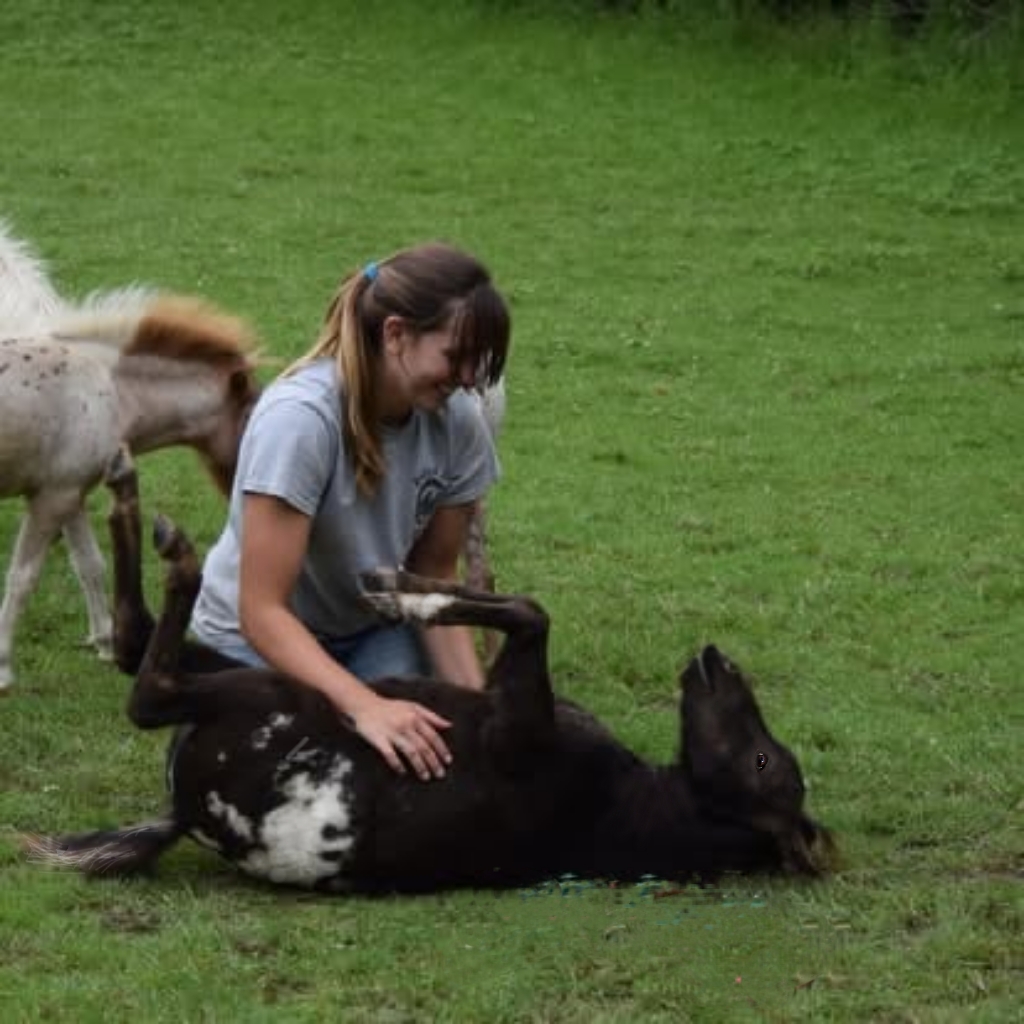
mommy and baby horses kissing

Frequently Asked Questions

What is Equine Eyes?

Equine Eyes is a nonprofit organization that trains and places miniature guide horses with individuals who are blind or have low vision. Our service horses are provided free of charge to qualified recipients, offering long-term mobility assistance.

Who qualifies to receive a miniature guide horse from Equine Eyes?

Our horses are available to individuals with visual disabilities who demonstrate a need for long-term mobility support and the ability to care for a miniature horse. We assess each applicant to ensure a good match with our program’s goals and responsibilities.

What kind of training do the miniature horses undergo?

Each horse completes a comprehensive training program that lasts between 12 and 24 months. The program includes positive reinforcement training, desensitization, public access skills, and advanced mobility tasks, such as navigating curbs, avoiding obstacles, and responding to voice commands.

How does Equine Eyes ensure the safety and well-being of thehorses after placement?

All service horses remain the property of Equine Eyes for life. Recipients lease the horse under an agreement that includes required notification if they can no longer care for the animal. We provide ongoing support and will retrieve the horse if care standards are not met or the handler’s circumstances change.

Are there any restrictions for those who receive a guide horse?

Yes. Recipients may not breed the horse, must use the horse regularly to mitigate their disability, and must notify Equine Eyes within 48 hours if they are unable to care for the horse due to illness, travel, incarceration, or other life events.

Where do the miniature horses come from?

Our horses come from various sources, including breeders, private owners, rescue organizations, and even kill pens. We give many of these animals a second chance through compassionate training and purpose-driven care.

Does Equine Eyes offer support after the horse is placed with a recipient?

Yes. Equine Eyes provides lifelong support to every horse-handler team. We remain engaged with our recipients to ensure the continued success, and well-being of our miniature guide horses.

Our Latest News

Toyland Falabella International

Toyland Miniature Horse Farm is owned and operated by Laureen Stevens, a respected breeder dedicated to preserving the integrity, health, and temperament of the pure Falabella. Toyland prioritizes ethical breeding practices, sound conformation, and proper handling from birth – standards that closely align with the foundational requirements of guide horse work.

Partnering with breeders who share these values helps ensure that our horses are thoughtfully prepared for success long before formal training begins.

Laureen Stevens has generously donated a 32-inch, triple-registered black Falabella stallion to Equine Eyes in support of our future breeding program. His registered name is Toyland Toroco, and he is affectionately known as “Mister.”

This extraordinary gift allows Equine Eyes to begin building a carefully structured breeding program focused on temperament, intelligence, soundness, and suitability for guide work. We are confident that Mister’s calm disposition, refined physique, and trainability will positively influence future generations.

We are deeply grateful to Laureen Stevens for her generosity, encouragement, and belief in our mission.